- 1-807-228-1532
- support@dnb3d.ca
Free shipping on orders over $175
New Products added Daily
Ready to Ship | Seasonal Gifts | Custom Orders
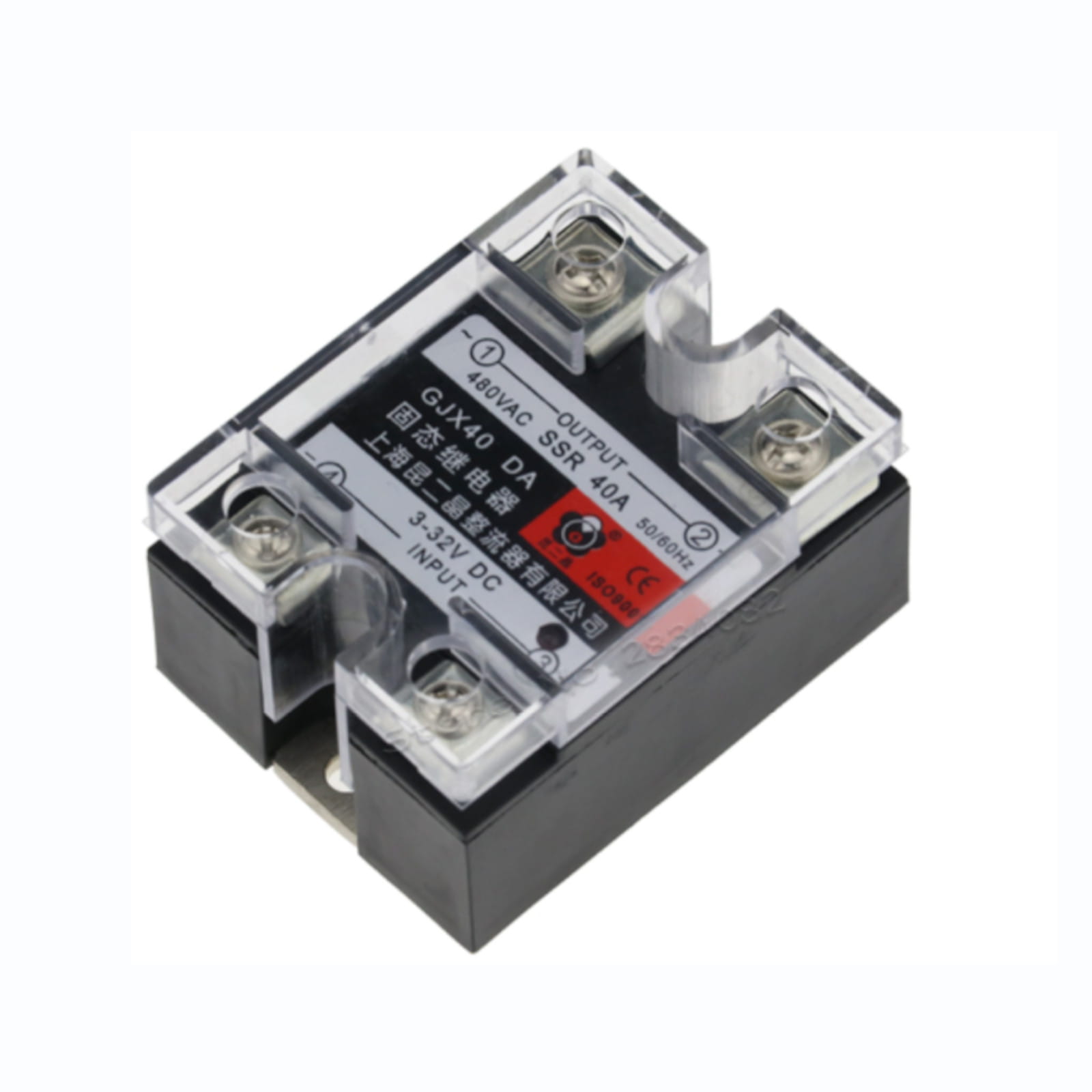
<p><strong>Solid State Relay GJX40.DA 40A</strong> for compatible DC-controlled AC load switching applications, including control panels, heated equipment, electronics projects, and custom machine wiring.</p>
<ul>
<li>Input voltage: 3–32VDC</li>
<li>Output voltage: 24–480VAC</li>
<li>Output current: 40A</li>
<li>Useful for compatible heater control, equipment wiring, and control panel applications</li>
<li>Sold individually</li>
</ul>
$22.95

The solid state relay GJX40.DA is a 40A electronic switching component designed for compatible DC-controlled AC load applications. With a 3–32VDC input and 24–480VAC output, this SSR can be used in electrical control panels, heated equipment, electronics projects, machine wiring, and custom equipment builds where silent, fast, solid-state switching is required.
This relay allows a low-voltage DC control signal to switch a higher-voltage AC load, depending on the application and wiring design. Solid state relays have no mechanical contacts, which means they can switch without the clicking sound or mechanical wear associated with traditional electromagnetic relays.
The GJX40.DA 40A solid state relay can be used in compatible applications such as heater control, machine control circuits, electronics enclosures, control panels, automation projects, and other AC load switching setups. Always confirm the load type, current draw, voltage range, wiring method, heat sinking, and safety requirements before installation.
Solid state relays are commonly used where the control side and load side need to remain electrically isolated. This makes them useful for systems where a low-voltage controller, board, or control circuit is used to switch a separate AC load circuit.
Solid state relays generate heat during operation. When switching higher current loads, proper mounting, ventilation, and heat sinking may be required. The relay should be installed in a suitable enclosure by someone familiar with electrical wiring and control components.
Browse more electronics parts, hardware components, and accessories for control panels, equipment wiring, repair, and custom build projects.
For a general overview of how solid state relays work, see DigiKey’s guide to solid state relays.
Each GJX40.DA solid state relay is sold individually, making it easy to order the quantity needed for your control panel, equipment repair, or custom electrical project.
| Product Type | Solid state relay / SSR |
|---|---|
| Model | GJX40.DA |
| Input Voltage | 3–32VDC |
| Output Voltage | 24–480VAC |
| Output Current | 40A |
| Max. Working Voltage | 250V |
| On Voltage | ≤1V |
| One-Off Time | ≤10ms |
| Off Leakage Current | ≤2mA |
| Common Applications | Control panels, heater control, equipment wiring, electronics projects, machine wiring, and compatible DC-to-AC switching applications |
| Quantity | Sold individually |
| SKU | DB-0575-6863 |
Verification note: Physical dimensions, terminal type, zero-cross/random-fire type, certification markings, operating temperature range, required heat sink rating, manufacturer datasheet, and exact load compatibility are not listed on the current product page and should be verified before adding.